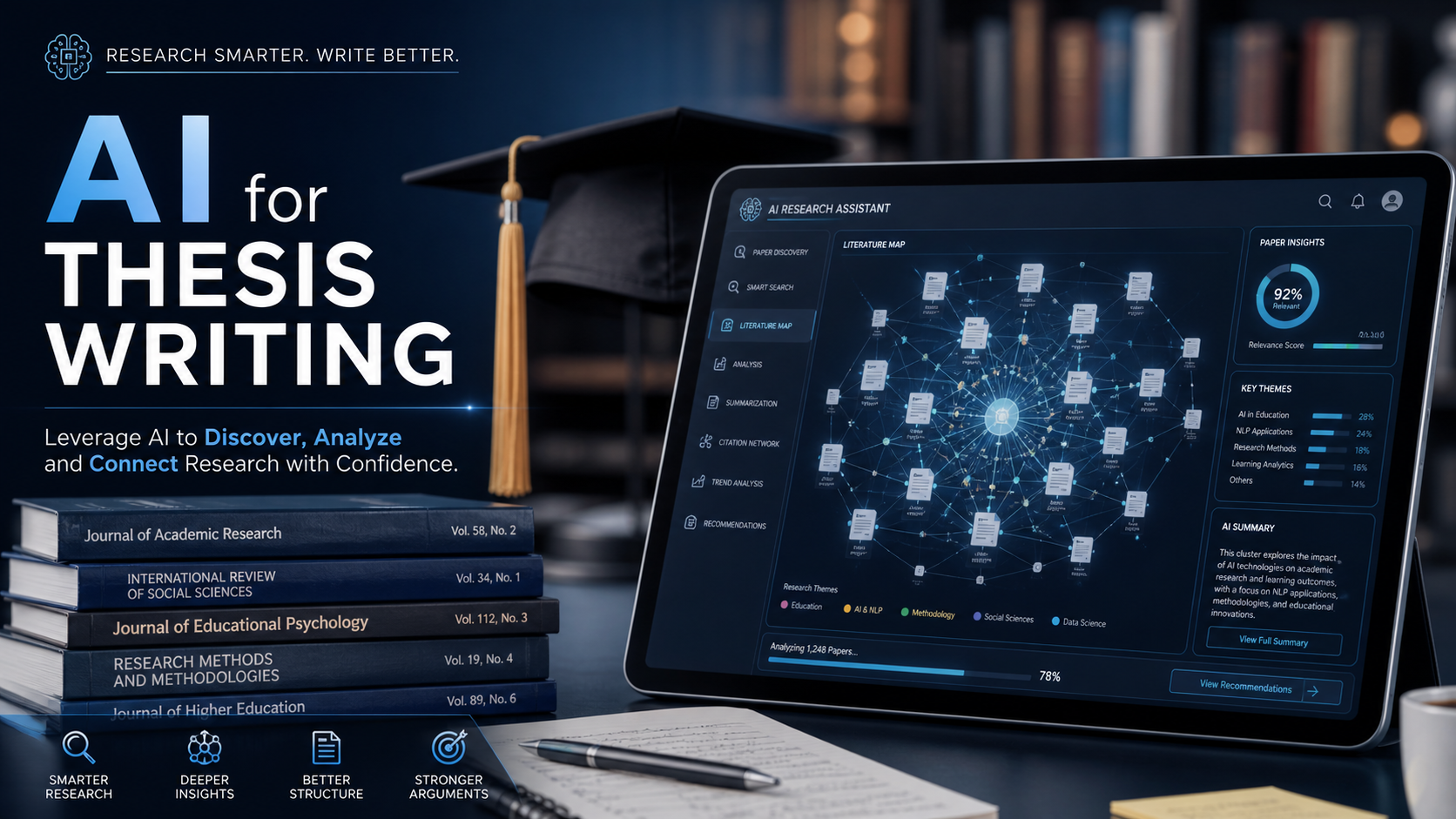
The Literature Review Nightmare
For any graduate student, the literature review is the most daunting part of a thesis. You have to read hundreds of papers, extract relevant findings, and synthesize them into a coherent narrative.
In the past, this meant a desk covered in highlighters and sticky notes. In 2026, researchers are using Atlas AI to organize their research in a fraction of the time.
1. Building Your Research Library
Stop letting your PDFs sit in a messy folder on your Desktop. Upload every journal article, case study, and dissertation to Atlas AI.
Atlas uses Vector Embeddings to "understand" the relationships between your papers. This means you can search for a concept—like "long-term impact of remote learning"—and the AI will find every mention across your entire library, even if the authors used different keywords.
2. Synthesizing Information Across Multiple Papers
The hardest part of a literature review is "The Synthesis"—combining findings from multiple sources.
Use the AI Chat to ask cross-document questions:
- •"What are the common themes among these three papers regarding [Topic]?"
- •"Does Paper A contradict the findings of Paper B in any way?"
- •"Summarize the methodology used in all my 'Psychology' tagged papers."
3. Maintaining Academic Integrity with Citations
The biggest risk in using AI for academic writing is accidental plagiarism or hallucination.
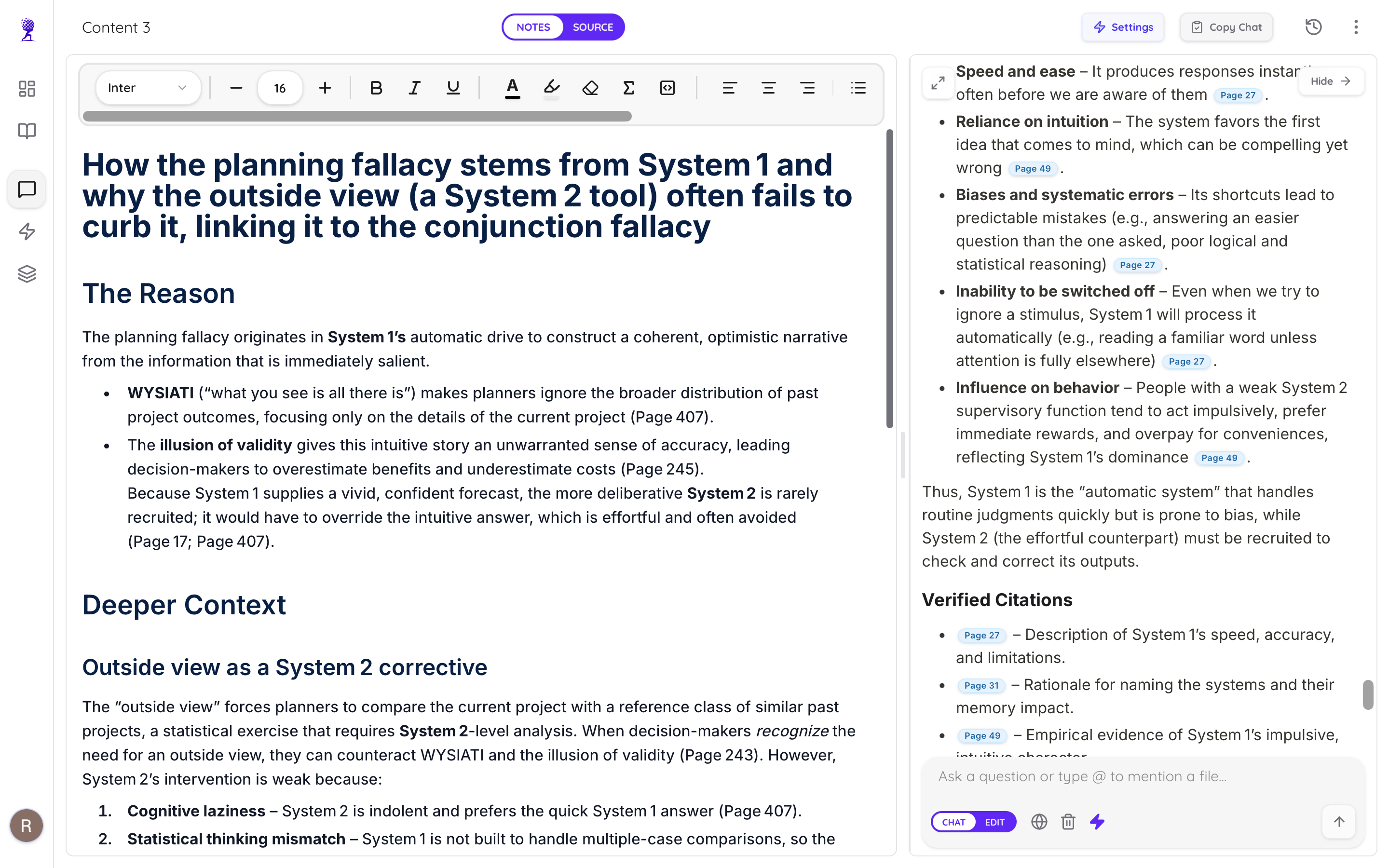
Atlas AI solves this with Click-to-Verify Page Citations. Every time the AI summarizes a paper or answers a question, it provides a link. Clicking it takes you directly to the exact page in the PDF. This ensures:
- •No Hallucinations: You can verify the data instantly.
- •Perfect Citations: You know exactly which page to cite in your bibliography.
4. Extracting Key Data Points
Need to build a comparison table for your thesis? Don't spend hours copying and pasting. Ask the AI:
- •"Extract the sample sizes and p-values from all the studies in my '2024 Research' folder and format them as a table."
5. From Research to Writing
Once you've analyzed your sources, use Atlas AI to help you outline:
- • Literature Summary: Get a draft summary of each key paper.
- • Gap Analysis: Ask the AI to identify areas where the current research is lacking—this is often the most important part of your thesis.
- • Drafting: Use the AI as a brainstorming partner to outline your chapters.
Conclusion: Focus on the Insight, Not the Admin
Academic research is about finding new insights and contributing to your field. Don't let the administrative burden of managing PDFs and citations slow you down.
By using a dedicated AI study system, you can handle the "heavy lifting" of data retrieval and synthesis, allowing you to focus on the high-level analysis that will make your thesis stand out.
Ready to finish that thesis? Try Atlas AI for free →